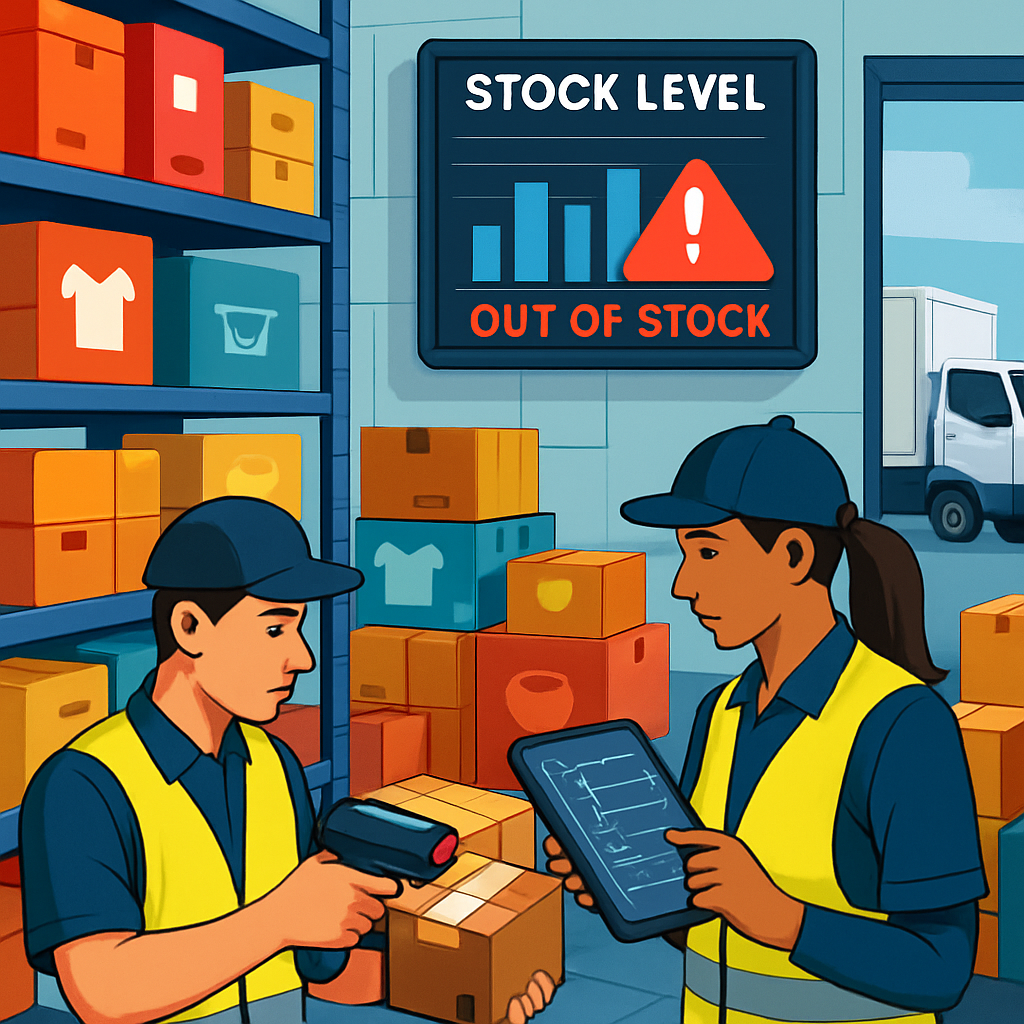

A stockout occurs when inventory is unavailable to meet customer demand. In ecommerce operations, stockouts result in lost sales, degraded customer experience, and operational disruption.
Stockout is also referred to as out-of-stock; this article uses “stockout” consistently.
1. What it is (Definition)A stockout happens when available inventory reaches zero while demand still exists. At that point, orders cannot be fulfilled without delay or cancellation.
In ecommerce, stockouts are particularly visible. Listings may be disabled, ads may be paused, and customers may permanently switch to alternatives.
Stockouts are not only a fulfillment issue. They are often the downstream result of planning errors, lead-time variability, or inventory execution failures.
2. Who it’s forStockout management is critical for ecommerce brands and aggregators that depend on continuous availability to drive revenue.
Shopify-based brands face immediate lost sales and customer dissatisfaction when products go out of stock.
Amazon and Walmart 3P sellers are especially vulnerable, as stockouts can harm listing visibility, algorithmic ranking, and long-term sales performance.
Multichannel ecommerce teams must manage stockouts carefully to avoid one channel consuming inventory needed by another.
3. How it worksStockouts occur when demand exceeds available inventory before replenishment arrives. This can be caused by forecast underestimation, delayed replenishment, or inventory inaccuracies.
Once a stockout happens, recovery is not always immediate. Even after restocking, sales velocity may lag due to lost momentum, disabled listings, or customer churn.
Preventing stockouts requires coordinated demand forecasting, inventory planning, accurate execution, and timely replenishment.
Some stockouts are intentional, such as when winding down a product, but most are unplanned and costly.
4. Key metricsInventory turnover may appear artificially high during stockouts, as inventory sells out completely.
Sell-through rate can be misleadingly strong if stockouts truncate sales.
Weeks of supply reaching zero is the direct signal of a stockout event.
Fill rate is the most direct metric impacted, as stockouts reduce the percentage of demand fulfilled immediately.
These metrics must be interpreted carefully to distinguish healthy velocity from constrained availability.
5. FAQAre stockouts always bad?
Unplanned stockouts are generally negative; planned run-downs may be acceptable.
What causes stockouts most often?
Forecast errors, lead-time delays, and inventory data inaccuracies.
Do stockouts affect long-term sales?
Yes, especially on marketplaces where ranking and visibility are impacted.
How can stockouts be prevented?
Through better forecasting, safety stock, and accurate lead-time assumptions.
Should stockouts be tracked explicitly?
Yes. Tracking stockout frequency and duration highlights systemic issues.