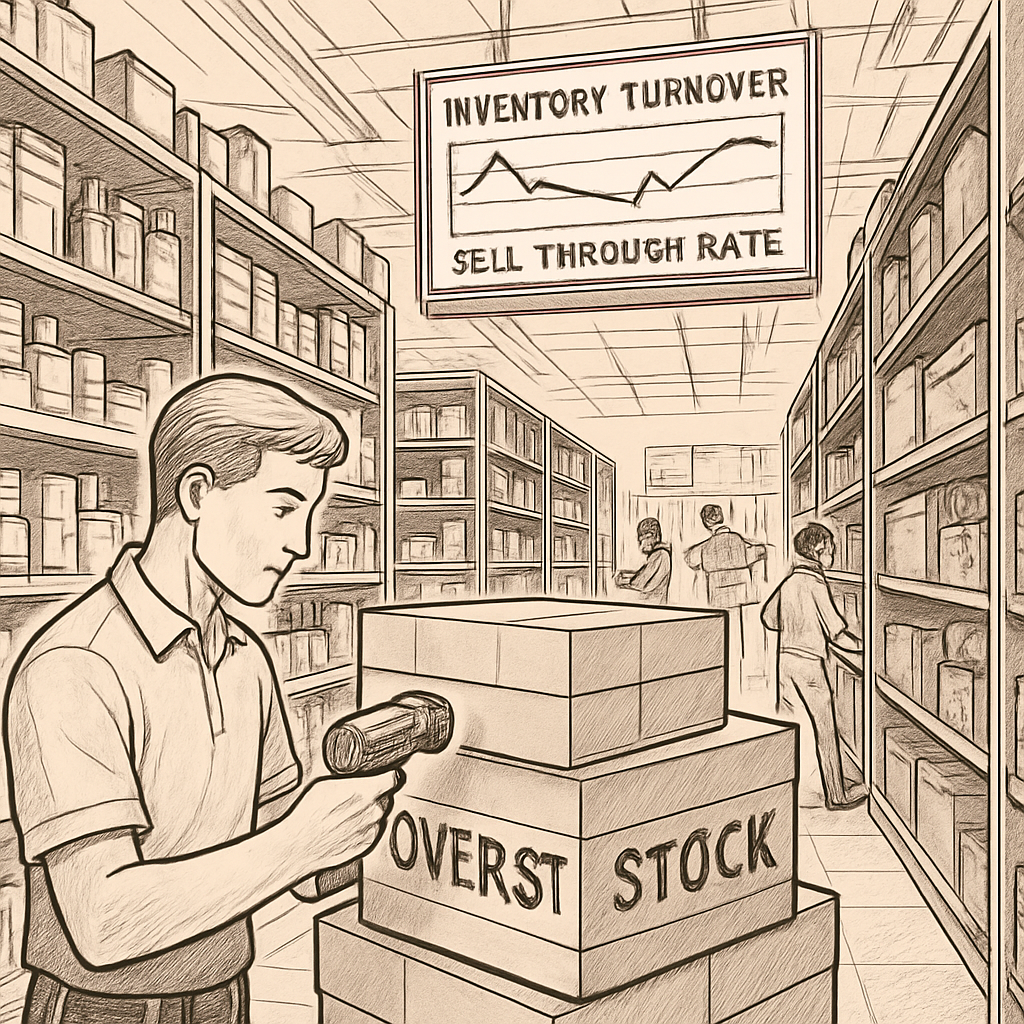

Overstock refers to inventory held in excess of what is required to meet expected demand. In ecommerce operations, overstock ties up working capital, increases holding costs, and reduces operational flexibility without improving sales outcomes.
Overstock is sometimes referred to as excess inventory; this article uses “overstock” consistently.
1. What it is (Definition)Overstock occurs when inventory levels exceed realistic near- and mid-term demand. Unlike safety stock, which is intentional and risk-driven, overstock is typically the result of planning or execution mismatches.
In ecommerce, overstock often arises from forecast overestimation, large minimum order quantities, long lead times, or demand slowdowns that were not reflected in purchasing decisions.
Overstock is not inherently visible in unit terms alone. Its impact becomes clear when inventory sits idle for extended periods, forcing markdowns, promotions, or write-downs to recover cash.
For mid-market ecommerce brands, overstock is one of the most common sources of margin erosion and cash flow pressure.
2. Who it’s forOverstock management is especially relevant for ecommerce brands and aggregators operating with limited working capital and growing assortments.
Shopify-based brands experience overstock when product launches or promotions underperform, leaving inventory stranded after demand peaks.
Amazon and Walmart 3P sellers face amplified overstock risk due to storage fees, aged inventory penalties, and listing performance impacts tied to excess stock.
Multichannel ecommerce teams must manage overstock carefully, as excess inventory in one channel or location may not be easily redeployed to another.
3. How it worksOverstock develops when inventory inflows exceed outflows for an extended period. This can happen quickly when demand changes but purchasing decisions lag behind.
Once inventory becomes overstocked, options narrow. Teams may slow or stop reordering, reallocate inventory across channels, or use pricing and promotions to accelerate sell-through.
Operationally, overstock increases complexity. Warehouses become congested, picking efficiency declines, and capital remains locked in inventory instead of funding growth initiatives.
Preventing overstock relies on accurate demand planning, disciplined inventory planning, and regular review of inventory coverage and velocity.
4. Key metricsInventory turnover declines as overstock increases, signaling that inventory is moving more slowly than planned.
Sell-through rate highlights overstock at the SKU level, especially when inventory remains unsold long after receipt.
Weeks of supply expands beyond planning targets when overstock accumulates, making excess visible in time-based terms.
Fill rate may remain high during overstock periods, which can mask underlying inefficiency if evaluated in isolation.
These metrics together distinguish healthy availability from costly excess.
5. FAQIs overstock the same as safety stock?
No. Safety stock is intentional; overstock is unplanned excess.
What typically causes overstock?
Forecast errors, high MOQs, long lead times, and unplanned demand slowdowns.
Is overstock always bad?
It is generally negative, though some overstock may be acceptable temporarily during growth or transitions.
How is overstock reduced?
By slowing purchases, reallocating inventory, or using controlled promotions.
Should overstock be tracked explicitly?
Yes. Identifying overstock early prevents it from becoming dead stock.