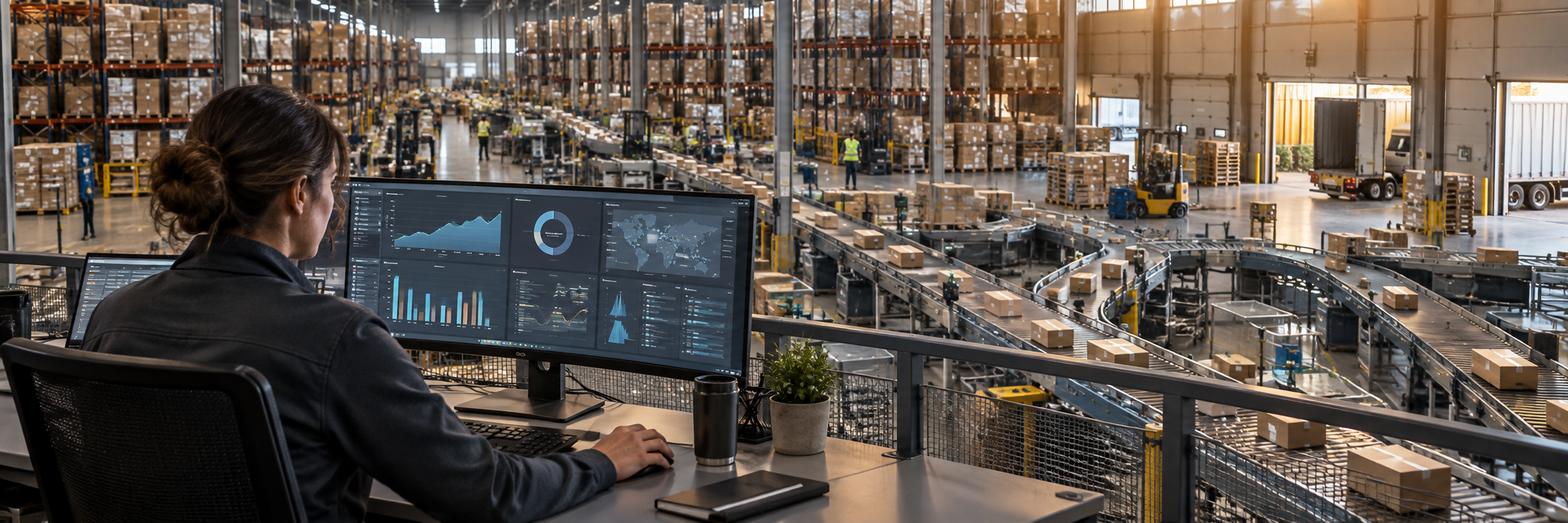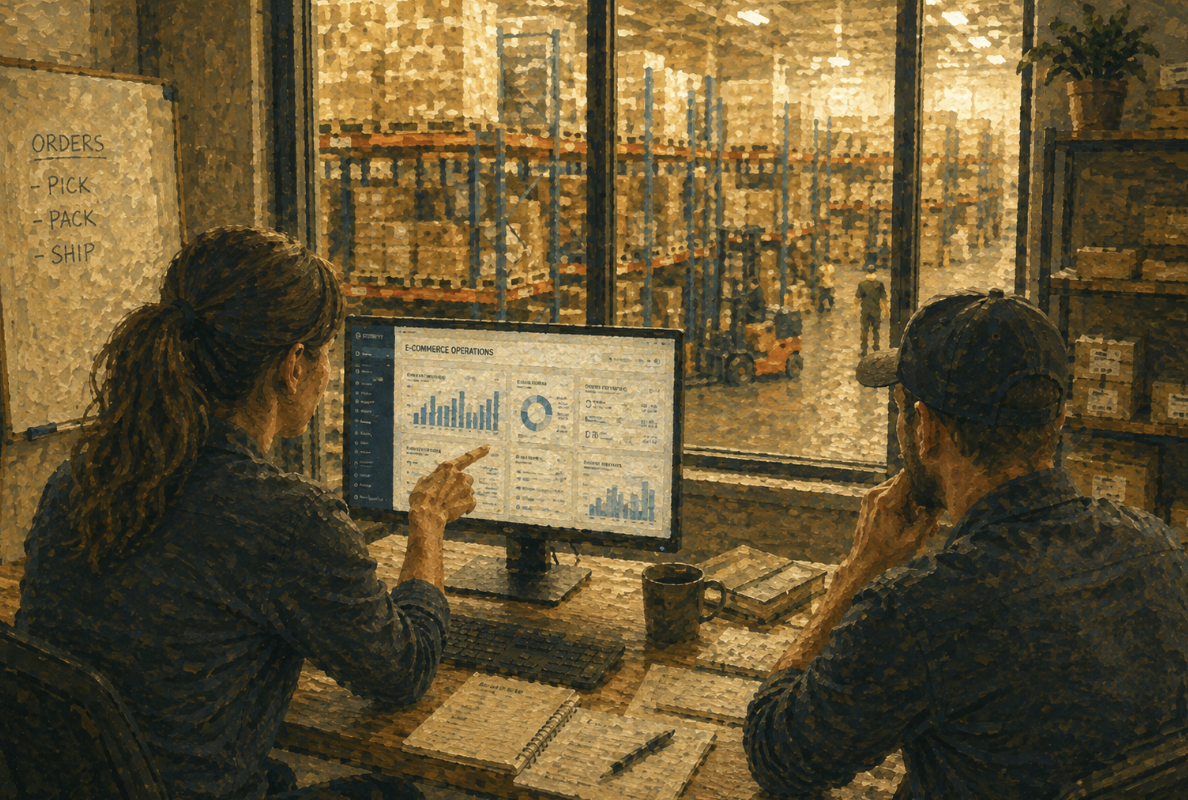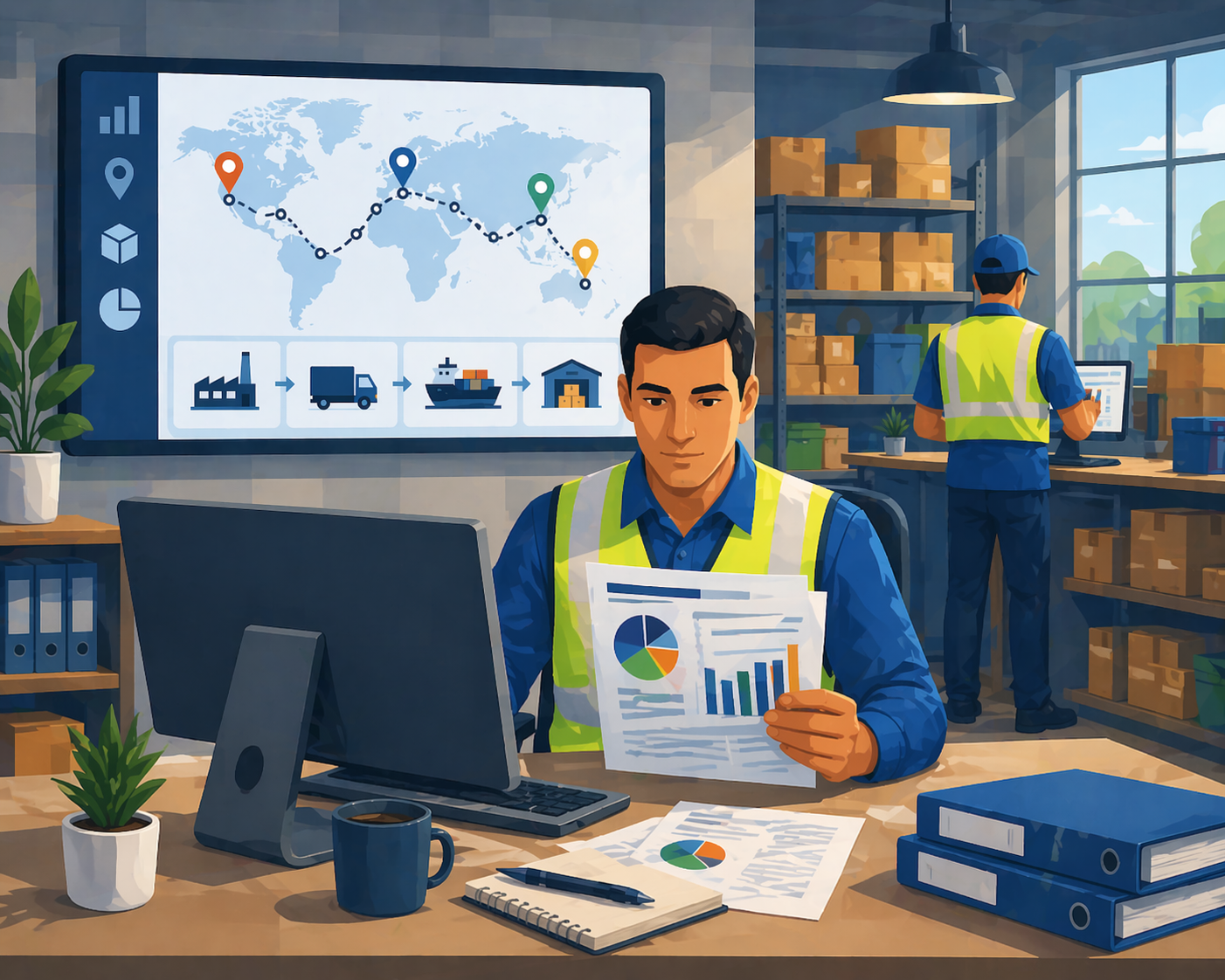

Most ecommerce brands believe they have supply chain visibility.
They can pull reports. They can check inventory levels. They can see what sold last week.
But that’s not visibility. It’s hindsight.
By the time most teams identify a problem, the damage is already done. Stockouts have already happened. Cash is already tied up in excess inventory. Customer experience has already taken a hit.
Real supply chain visibility isn’t about looking backward. It’s about understanding what’s happening now and what’s about to happen next. That shift is exactly where modern, AI-driven systems are starting to change the game.
What Is Supply Chain Visibility?
At its core, supply chain visibility is the ability to track, understand, and act on data across your entire operation from suppliers to warehouses to sales channels.
That includes knowing where your inventory is, how it’s moving, and how demand is evolving across every channel you sell on.
Traditionally, visibility meant pulling data from different systems and piecing it together manually. But in today’s ecommerce environment, that approach falls short. When data is fragmented and delayed, decisions become reactive by default.
Modern visibility is no longer just about accessing data. It’s about having systems that can interpret that data in real time and surface what actually matters—before small issues turn into expensive problems.
Why Most Ecommerce Brands Don’t Actually Have It
The gap between perceived visibility and actual visibility usually comes down to how data is managed.
Most ecommerce brands operate across multiple platforms like Shopify, Amazon, 3PL providers, and ERPs, each holding a different piece of the puzzle. Even if each system works well on its own, they rarely communicate in a way that creates a clear, unified picture.
As a result, teams rely on exports, spreadsheets, and manual updates to connect the dots. That process introduces delays, inconsistencies, and a constant risk of human error.
The bigger issue is that traditional systems are built to report what already happened. They aggregate historical data, but they don’t help teams understand what’s changing in real time.
This is where AI begins to shift the equation. Instead of requiring teams to dig through data and interpret it themselves, AI-driven systems connect fragmented data sources and surface insights automatically. They highlight patterns, flag risks, and make it easier to act quickly—without relying on constant manual analysis.
Why Supply Chain Visibility Matters More Than Ever
Ecommerce has become significantly more complex over the past few years.
Brands are selling across more channels, managing more SKUs, and dealing with increasingly unpredictable demand. In that environment, even small blind spots can have an outsized impact.
A lack of visibility often shows up in familiar ways. Products go out of stock at the worst possible time. Inventory piles up in the wrong locations. Cash gets locked into slow-moving items while high-performing products can’t stay on the shelf.
These aren’t just operational issues—they’re growth constraints.
When visibility is limited, decisions are made reactively. Teams are constantly catching up instead of planning ahead. But when visibility improves, so does the ability to stay in control of inventory, protect margins, and deliver a more consistent customer experience.
What True Supply Chain Visibility Looks Like
Real supply chain visibility goes beyond dashboards and reports.
It creates a single, reliable view of inventory and demand across every channel, updated in real time. Instead of jumping between systems, teams can see exactly what’s happening at the SKU level, across warehouses and marketplaces, without needing to manually reconcile data.
More importantly, true visibility doesn’t stop at the present moment. It extends into the future.
The most effective systems don’t just show where inventory stands today—they help teams understand where it’s headed. They surface demand trends, identify potential risks, and make it easier to anticipate issues before they impact the business.
How AI Is Changing Supply Chain Visibility
AI is fundamentally changing what supply chain visibility looks like in practice.
Instead of relying on static forecasts and manual updates, AI-driven systems continuously learn from new data. They analyze patterns across products, channels, and timeframes, adjusting as conditions shift.
This allows teams to move from reactive decision-making to something much more proactive.
Rather than discovering a stockout after it happens, they can see it coming. Instead of over-ordering based on outdated trends, they can align inventory with real-time demand signals.
AI also reduces the operational burden on teams. Instead of spending hours pulling reports and updating spreadsheets, they can focus on higher-level decisions, supported by systems that are already surfacing the most important insights.
The end result isn’t just better visibility. It’s a more responsive, more resilient supply chain.
How to Improve Supply Chain Visibility
Improving visibility starts with simplifying how data flows across your business.
When systems are disconnected, visibility will always be limited. Creating a centralized view of inventory, demand, and operations is the first step toward gaining real clarity.
From there, the focus shifts to reducing reliance on manual processes. The more your team depends on spreadsheets and one-off reports, the harder it becomes to act quickly and confidently.
Investing in systems that integrate across channels—and that can interpret data rather than just display it—makes a measurable difference. This is where AI-driven platforms help ecommerce brands move beyond reactive planning and into predictive decision-making.
Supply chain visibility used to mean knowing what happened.
Today, that definition is no longer enough.
In a fast-moving ecommerce environment, real visibility means understanding what’s happening right now and having a clear view of what’s coming next. It means making decisions with confidence instead of reacting under pressure.
As complexity continues to grow, the gap between traditional visibility and modern, AI-powered visibility will only widen.
The question for most brands isn’t whether visibility matters—it’s whether their current systems are actually delivering it.
If you’re still relying on spreadsheets or disconnected tools to manage inventory and demand, it may be time to rethink your approach.
Flieber helps ecommerce brands unlock real-time supply chain visibility with AI-driven forecasting and smarter inventory decisions.