
Inventory planning and inventory management are often grouped together, and while they are closely connected, they serve very different purposes within an ecommerce business. Understanding that difference is critical for brands trying to grow efficiently, protect margins, and avoid the constant cycle of stockouts and excess inventory.
Many businesses assume inventory problems start in the warehouse, but in reality, they often begin much earlier—with planning. Late purchase orders, emergency air freight, overstocked slow movers, and cash tied up in unsold products are rarely just operational issues. More often, they are the result of poor forecasting and reactive decision-making.
The difference between inventory planning and inventory management comes down to one simple idea: inventory planning determines what inventory you should have, while inventory management focuses on handling the inventory you already have. Both are essential, but without strong planning, management becomes a constant exercise in damage control.
What Is Inventory Planning?
Inventory planning is the strategic side of inventory operations. It focuses on forecasting future demand and determining how much inventory your business should purchase to meet customer demand without overcommitting cash.
This process involves analyzing historical sales data, seasonality, promotional calendars, supplier lead times, reorder points, and overall market trends. The goal is to ensure that the right products are available at the right time, in the right quantities.
Strong inventory planning helps brands answer important questions before they become expensive problems. How much inventory should we order this month? Which SKUs are likely to experience increased demand next quarter? Are we carrying too much risk in slow-moving products? How can we reduce stockouts without increasing excess inventory?
Traditionally, many brands have relied on spreadsheets and manual forecasting to answer these questions. But as businesses grow and operations become more complex, manual planning becomes increasingly unreliable. This is why more ecommerce teams are turning to AI-powered forecasting tools that improve visibility and help them make faster, more accurate decisions.
If you’re exploring forecasting methods further, our guide on demand planning models breaks down the most effective approaches modern ecommerce teams use to improve planning.
At its core, inventory planning is proactive. It helps prevent problems before they happen.
What Is Inventory Management?
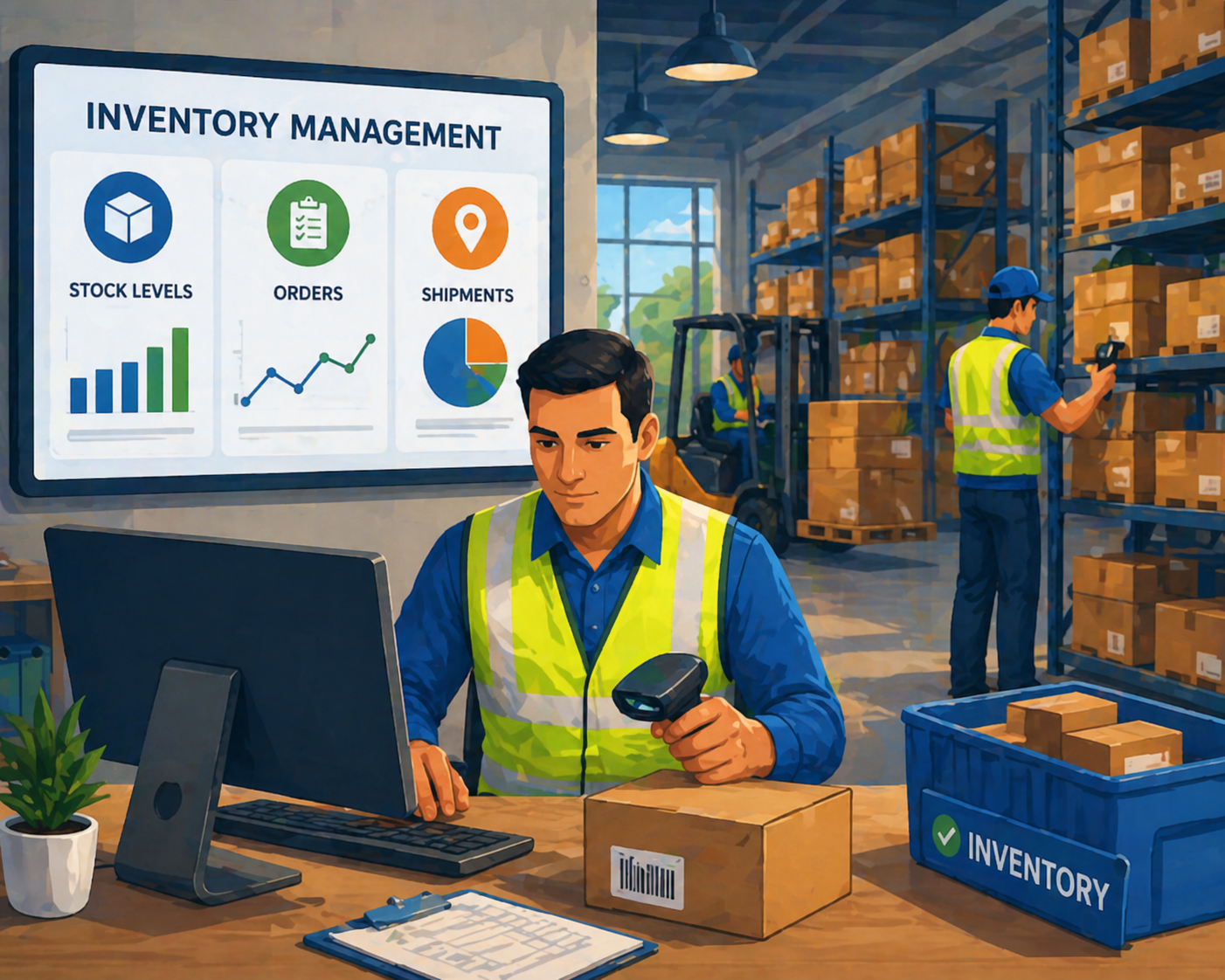
Inventory management is the operational execution of your inventory strategy. Once inventory has been purchased, management focuses on tracking, storing, organizing, and controlling that stock across your business.
This includes monitoring inventory levels, maintaining accurate stock counts, managing purchase orders, overseeing replenishment cycles, coordinating with suppliers, and ensuring inventory is correctly allocated across all sales channels. For brands selling on Shopify, Amazon, wholesale, and retail simultaneously, this becomes even more complex.
Inventory management ensures that the inventory your business planned for is actually available, accurate, and moving efficiently through your supply chain. Without strong execution, even the best forecasting can fall apart.
This is where supply chain visibility becomes incredibly important. Teams need real-time access to inventory data across warehouses, suppliers, and sales channels to avoid costly surprises. Our article on supply chain visibility explains why visibility has become one of the most important competitive advantages for growing brands.
While inventory planning is strategic and forward-looking, inventory management is operational and immediate. It ensures your business can execute what your forecasts predict.
The Biggest Difference: Strategy vs. Execution
The simplest way to separate inventory planning from inventory management is to think of one as strategy and the other as execution.
Inventory planning decides what inventory should be available based on expected demand. Inventory management ensures that inventory is actually available and properly controlled once it enters the business.
For example, if your team realizes your best-selling product is likely to run out next month because demand is increasing faster than expected, that is an inventory planning issue. If your warehouse count is inaccurate and the inventory system says you have stock when you actually do not, that is an inventory management issue.
Both problems can lead to stockouts, missed revenue, and frustrated customers, but solving them requires different approaches.
Many brands unintentionally over-focus on management while neglecting planning. They improve warehouse efficiency, speed up fulfillment, and tighten operations, but they continue relying on reactive purchasing decisions and outdated forecasting methods. This creates a cycle where teams are constantly solving the same problems—rush shipping, panic reorders, dead stock, and shrinking margins.
It feels like an inventory management problem, but the root cause is often poor planning.
Why Ecommerce Brands Struggle With Both
As ecommerce brands scale, inventory complexity increases faster than most teams expect. What worked when the business was smaller often stops working as revenue grows.
Demand becomes less predictable. Sales channels expand. Supplier lead times fluctuate. Promotions create spikes that are difficult to forecast. Suddenly, inventory decisions carry much higher financial consequences.
At this stage, spreadsheets become less of a solution and more of a liability.
Most growing brands do not need more inventory—they need better decision-making around inventory. They need systems that help them understand where demand is headed, where risk exists, and how to balance service levels with profitability.
This is why more teams start looking for better inventory planning software rather than simply trying to improve manual processes. Our guide to the best demand planning tools for ecommerce brands explores how brands are replacing reactive planning with more intelligent forecasting systems.
The brands that scale most successfully are not necessarily the ones carrying the most inventory. They are the ones making the smartest decisions with the inventory they have.
How AI Improves Inventory Planning and Management
AI has changed the way ecommerce brands approach both inventory planning and inventory management.
On the planning side, AI improves forecasting by identifying patterns that manual analysis often misses. It can account for seasonality, promotion impact, channel-specific demand shifts, and supplier risk in ways that spreadsheets simply cannot keep up with. This helps teams make better decisions about what to buy, when to buy it, and how much risk they are carrying.
On the management side, AI improves visibility and responsiveness. Teams can identify issues faster, respond to supply chain disruptions earlier, and make decisions using real-time information instead of outdated reports.
This leads to fewer stockouts, less excess inventory, healthier cash flow, and stronger margins. It also removes one of the biggest hidden costs in ecommerce operations: constant reactive decision-making.
Instead of spending hours copying data between systems and trying to predict problems manually, teams can focus on higher-value decisions that actually drive growth.
At Flieber, we believe inventory decisions should not rely on guesswork. They should be driven by accurate forecasting, clear visibility, and systems designed to help businesses scale with confidence.
Final Thoughts
Inventory planning and inventory management are both essential, but they are not interchangeable.
Inventory planning helps you decide what inventory you need in order to meet future demand. Inventory management helps you control and move the inventory you already have. One protects the future of your business, while the other protects the day-to-day operation.
If your team is constantly reacting to stockouts, expensive rush shipping, or cash tied up in excess inventory, the issue may not be inventory management alone. More often, it starts with planning.
The strongest ecommerce brands are not simply better at moving inventory. They are better at planning it.
And increasingly, they are using AI to make that happen.
Because better inventory planning does more than improve operations—it protects profitability, strengthens customer trust, and creates the foundation for sustainable growth.
Still managing inventory decisions with spreadsheets and guesswork?
Flieber helps ecommerce brands improve forecasting, reduce stockouts, and make smarter inventory decisions with AI-powered planning.