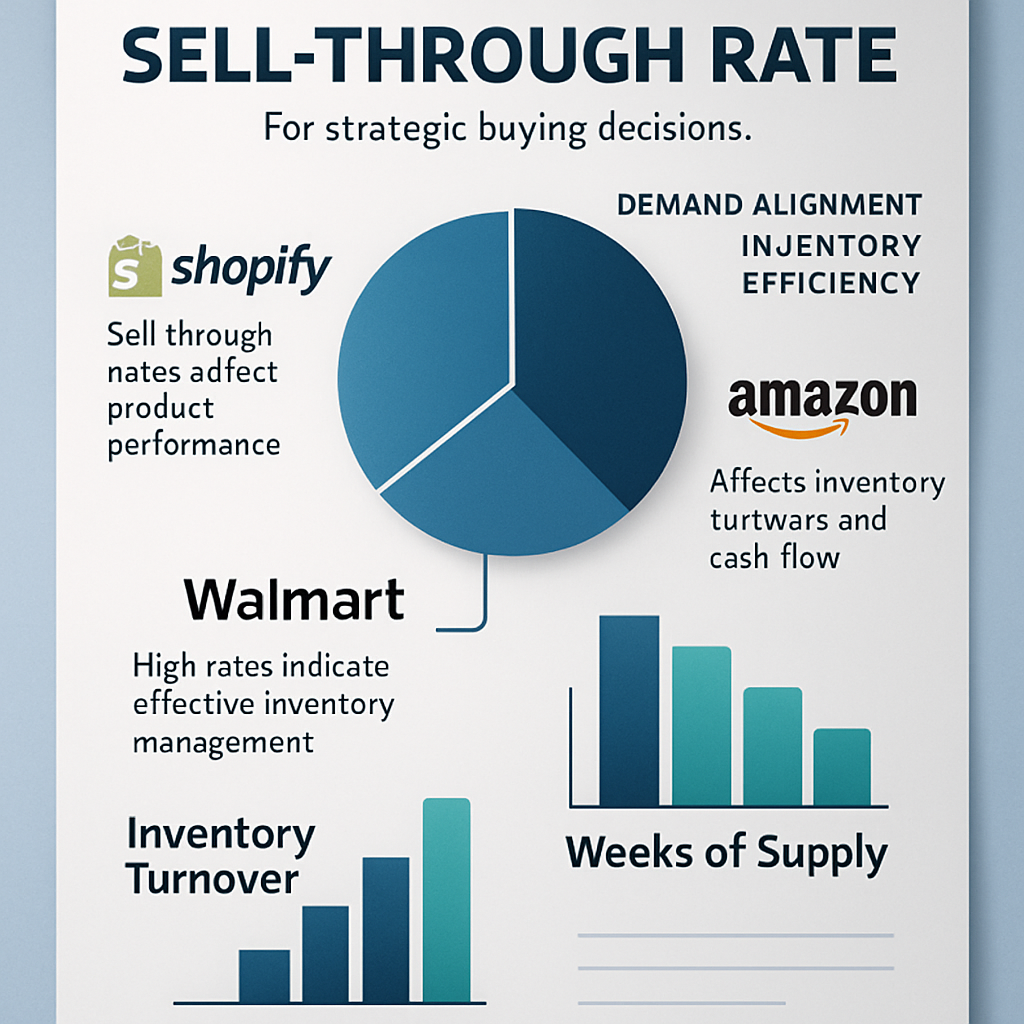

Sell-through rate measures how much of the inventory received has been sold over a given period. In ecommerce operations, it is a core indicator of demand alignment, buying accuracy, and inventory efficiency at the SKU level.
Sell-through rate is sometimes referred to as sell-through percentage; this article uses “sell-through rate” consistently.
1. What it is (Definition)Sell-through rate expresses the proportion of inventory sold relative to the inventory made available for sale during a specific time period. It connects purchasing decisions directly to realized demand.
In ecommerce, sell-through rate answers a simple but critical question: did the inventory we bought actually sell? Unlike revenue metrics, it focuses on inventory absorption rather than sales volume alone.
Sell-through rate is especially useful for evaluating individual SKUs, launches, seasonal products, and replenishment cycles. It highlights overbuying and underbuying faster than aggregate inventory metrics.
For mid-market ecommerce brands, sell-through rate is a key signal for adjusting future buys, promotions, and assortment decisions.
2. Who it’s forSell-through rate is essential for ecommerce brands and aggregators managing diverse product assortments.
Shopify-based brands use sell-through to evaluate product launches, promotional performance, and variant-level buying decisions.
Amazon and Walmart 3P sellers rely on sell-through to identify SKUs that are accumulating excess inventory and risking storage or aging penalties.
Multichannel ecommerce teams use sell-through to compare how inventory performs across channels and to identify where inventory is misallocated or underperforming.
3. How it worksSell-through rate is calculated by comparing units sold during a period to units received or available for sale in that same period. The timeframe should match the decision being evaluated, such as a launch window or replenishment cycle.
High sell-through indicates inventory was well matched to demand, while low sell-through signals overbuying, weak demand, or execution issues such as pricing or visibility.
Sell-through should be reviewed alongside inventory age and lifecycle stage. A low sell-through early in a product’s life may be acceptable, while the same result later may indicate declining relevance.
In practice, sell-through is monitored continuously and used to adjust future purchase quantities, promotional intensity, or product strategy.
4. Key metricsInventory turnover is closely related to sell-through, as strong sell-through typically contributes to higher turnover.
Weeks of supply provides context for sell-through, helping distinguish slow absorption from simply large initial buys.
Fill rate must be monitored alongside sell-through to ensure high sell-through is not caused by constrained availability.
Together, sell-through rate, inventory turnover, weeks of supply, and fill rate show whether inventory is selling efficiently without sacrificing service.
5. FAQIs sell-through rate the same as inventory turnover?
No. Sell-through focuses on specific inventory receipts, while turnover measures overall inventory velocity.
Should sell-through be tracked by SKU?
Yes. It is most actionable at the SKU or variant level.
Can high sell-through be a problem?
Yes, if it results from underbuying and frequent stockouts.
How often should sell-through be reviewed?
Typically weekly or monthly, depending on sales velocity.
Does sell-through differ by channel?
Yes. The same SKU may have very different sell-through rates by channel.