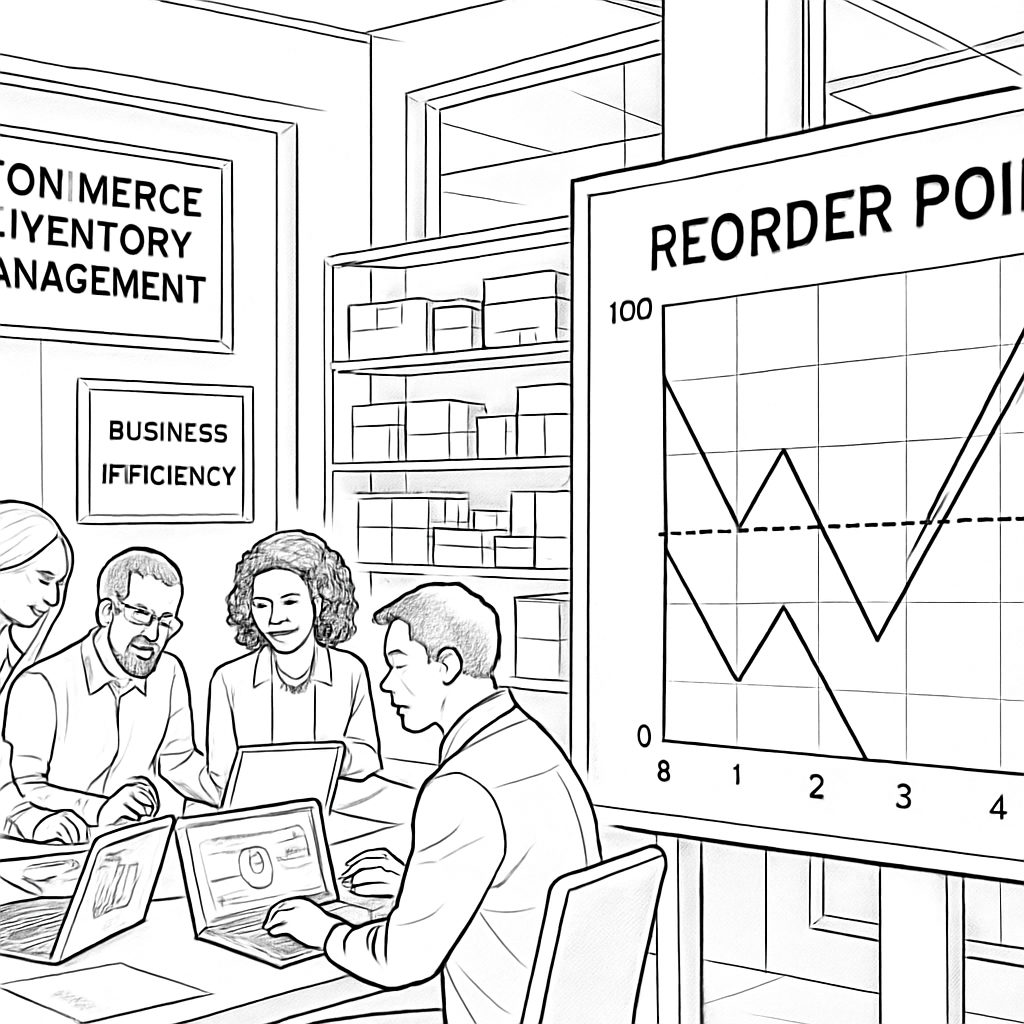
Reorder point is the inventory level at which a replenishment order should be placed. In ecommerce operations, it ensures new inventory arrives before existing stock is depleted.
Reorder point is sometimes referred to as reorder trigger; this article uses “reorder point” consistently.
What it is (Definition)
Reorder point defines the threshold at which inventory replenishment should begin. It connects demand rates and lead times into a clear operational signal.
In ecommerce, reorder point prevents reactive purchasing by triggering action before inventory risk becomes urgent.
It does not determine how much to order, only when to initiate replenishment.
1. Who it’s for
Reorder point logic is essential for ecommerce brands managing repeat replenishment cycles.
Shopify-based brands use reorder points to systematize purchasing as order volume grows.
Amazon and Walmart 3P sellers rely on reorder points to avoid listing downtime during replenishment lead times.
Multichannel teams use channel-aware reorder points to reflect different demand velocities.
2. How it works
Reorder points are set using expected demand during lead time plus any safety stock.
As inventory declines and reaches the reorder point, a purchase order or replenishment action is triggered.
Reorder points are reviewed regularly as demand rates or lead times change.
3. Key metrics
Inventory turnover improves when reorder points prevent overbuying.
Sell-through benefits from timely replenishment.
Weeks of supply directly informs reorder timing.
Fill rate is protected when reorder points are accurate.
4. FAQ
Is reorder point static?
No. It should be updated as demand and lead times change.
Does reorder point include safety stock?
Yes, in most cases.
Who monitors reorder points?
Operations or inventory planning teams.
Can reorder points be automated?
Yes, with integrated systems.
Do reorder points differ by SKU?
Yes, based on demand behavior.